
A plumbing leak becomes an emergency when it threatens safety, can cause rapid property damage, involves sewage or may be natural gas. Your first priority is not diagnosing the pipe—it is keeping people away from the hazard and stopping the source only when that can be done safely.
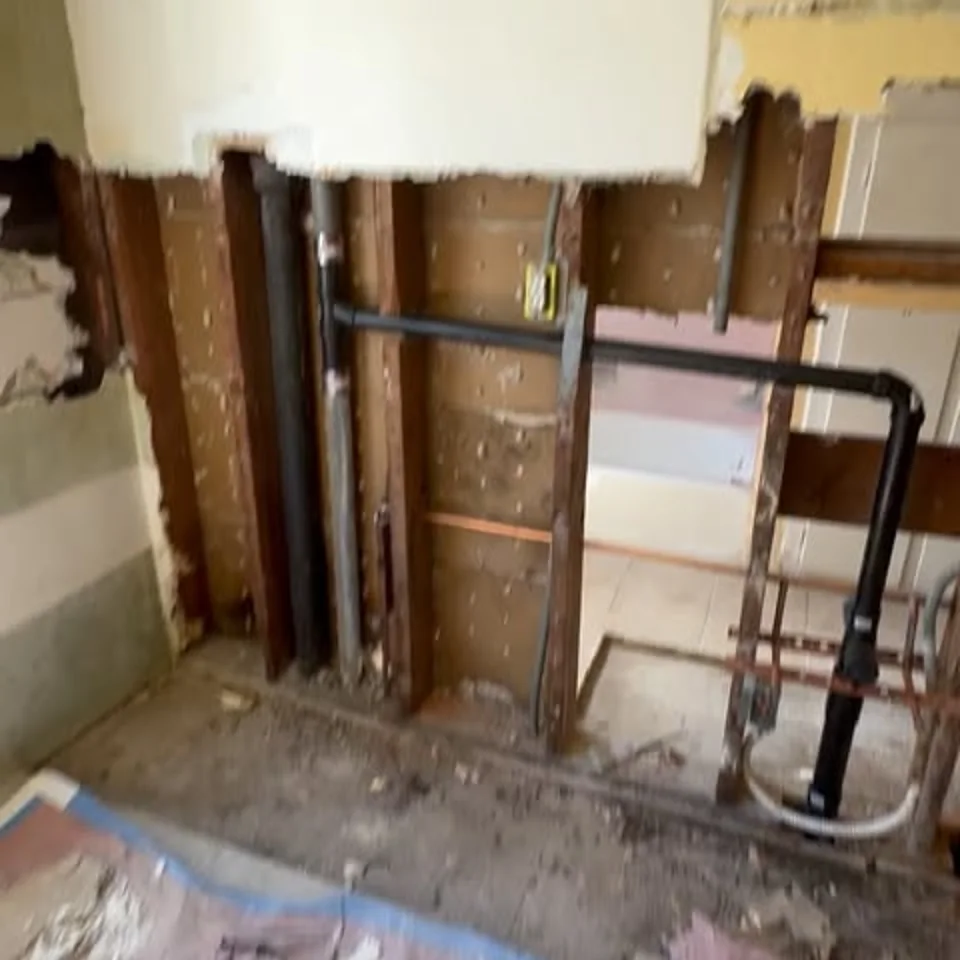
Call for urgent help when any of these are happening
- Water is flowing continuously and you cannot isolate it at the fixture.
- Water is reaching outlets, a panel, appliances or exposed wiring.
- A ceiling is sagging, bulging or releasing water.
- Sewage is backing up into a tub, shower or floor drain.
- A supply line, water heater or pipe has ruptured.
- You smell gas, hear hissing or see another sign of a natural gas leak.
- Water is entering a neighboring unit or a lower floor.
What to do during an active water leak
1. Keep away from electrical hazards
Do not step into standing water near electrical equipment. Do not reach for a breaker through water or touch wet electrical devices. If the area may be energized, keep people away and contact emergency or utility help from a safe location.
2. Shut off the smallest safe valve
If a toilet supply line is leaking, its local shutoff may stop the water without turning off the whole building. A sink or appliance may also have a nearby valve. If the leak is hidden, the local valve fails or several fixtures are affected, the main water shutoff may be necessary. Only operate a valve you can reach safely and recognize.
3. Relieve pressure and limit spread
After a safe water shutoff, open a low cold-water faucet to relieve pressure. Use containers and towels only if the area is safe to enter. Move belongings away from clean water, but do not handle sewage-contaminated items without proper protection.
4. Document what you can see
Take photos or a short video from a safe position. Note where the water first appeared, whether it changes when a fixture runs and how quickly it is spreading. This helps the plumber understand the likely source.
If you suspect a natural gas leak
SoCalGas instructs customers who smell natural gas, hear hissing or see other signs of a leak to evacuate. Do not smoke or create a flame. Do not turn lights or electrical appliances on or off, operate a vehicle near the leak or use a device that could create a spark. Do not attempt to control or repair the leaking pipe or meter.
A plumber can repair qualifying customer-owned piping after the utility or emergency responders have made the area safe. A suspected active gas leak is a utility and emergency response issue first.
When a water leak may be non-emergency
A contained drip into a sink, a faucet that stops when its local valve is closed or a small leak with no electrical or structural exposure may be schedulable rather than an immediate emergency. Even then, avoid postponing the repair: slow leaks can damage cabinets, flooring and walls or encourage mold growth.
Sewage backups require a different response
Stop using plumbing fixtures so more wastewater does not enter the blocked line. Keep people and pets away from the affected area. Do not use a household vacuum, and do not assume clear-looking water is sanitary. Professional drain service addresses the blockage; contaminated materials may also need specialized cleaning.
Information to have ready when you call
- Your location and whether the property is a house, apartment or commercial space.
- Whether the water or gas supply has been shut off.
- The fixture or room where the problem began.
- Whether electricity, ceilings, walls or another unit are affected.
- Photos of the visible problem, if they can be taken safely.
- Any recent repair, appliance installation or repeated symptom.
After the immediate source is controlled
Drying and repair should address more than the visible puddle. Wet wall cavities, flooring and insulation can retain moisture. Ask what needs to be opened, tested or monitored, and keep records of the cause and completed repair.
Water leak safely isolated?
R.G. Plumbing lists leak detection, gas-leak work, pipe locating and repair among its Los Angeles and Orange County services.